
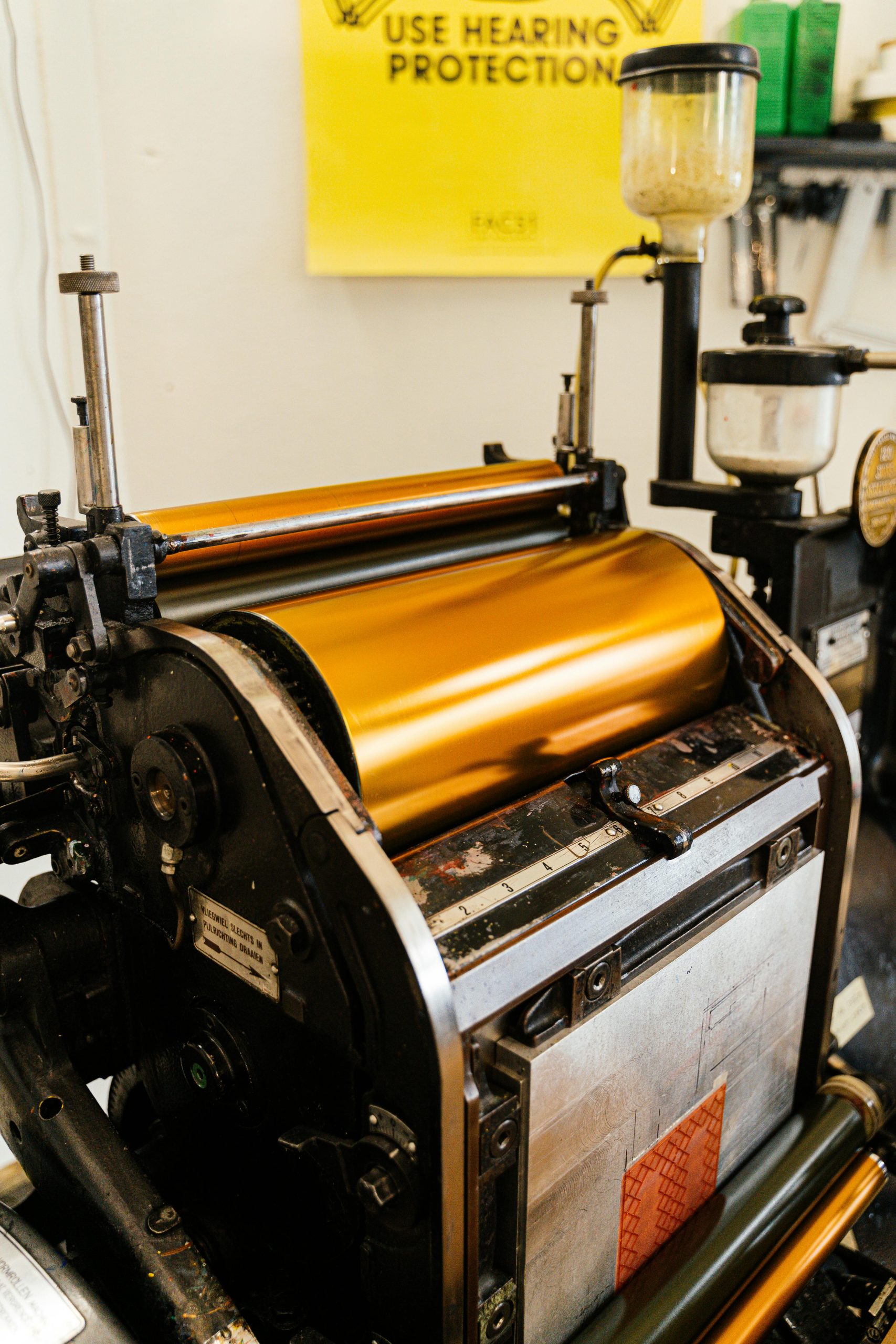
The origin of Printing
🖨️ From Stone to Scroll to Press: The Origin of Printing
The art of printing—something we often take for granted today—has roots in human ingenuity that stretch back thousands of years. Long before books were mass-produced, early civilizations found clever ways to share knowledge, beliefs, and stories through images and symbols pressed into surfaces.
🗿 Ancient Beginnings: Impressions Before Ink
Printing’s earliest forms weren’t on paper at all. Around 3000 BCE, the Sumerians carved symbols onto clay tablets, while ancient Chinese artisans used carved seals to stamp designs onto silk and other materials. These were precursors to what we now think of as “print”—a way to replicate images and text.
🀄 The Birth of Block Printing
By the 9th century in China, block printing had become more refined. Craftsmen would carve entire pages of text or intricate designs into wooden blocks, ink them, and press them onto paper. This technique allowed for the reproduction of Buddhist texts and art with stunning consistency.
Fun fact: The oldest known printed book is the Diamond Sutra, printed in 868 CE during the Tang Dynasty. And yes, that beats Gutenberg by centuries!
💡 Gutenberg and the Printing Revolution
Fast-forward to 15th-century Europe, and we meet Johannes Gutenberg, a German inventor who forever changed the world. Around 1440, he developed the movable type printing press. Instead of carving whole pages, individual metal letters could be rearranged and reused to form new pages—a radical leap in efficiency.
Gutenberg’s press didn’t just improve printing—it unleashed the Renaissance. His invention made the Bible and other texts more affordable and widespread, igniting waves of learning, questioning, and reform across Europe.
🌐 A Legacy That Shaped Our World
The printing press democratized access to knowledge, emboldened thinkers and dreamers, and set the stage for revolutions of thought—from the Enlightenment to the modern digital age. And though we’ve moved from presses to pixels, the spirit of printing—capturing and sharing ideas—is still alive in every blog, book, and bulletin.